How a routine coastal voyage became one of Guyana’s worst maritime tragedies and why tough questions on safety, loading, and accountability can no longer be avoided
On Saturday night, July 18, 2026, Guyana’s long‑serving coastal ferry MV Barima sank off the North Atlantic coast, turning a routine voyage into one of the country’s worst maritime disasters.
With the final death toll still undetermined and families anxiously awaiting news of missing loved ones, the tragedy has exposed deep concerns about ferry safety, vessel age, loading practices, and regulatory oversight that can no longer be ignored.
A Routine Voyage Turned Catastrophic
The MV Barima left Georgetown bound for Port Kaituma in the North West District, a journey the vessel had made for years as a critical link between hinterland communities and the capital.
On board were 116 passengers and 17 crew members, according to official figures but conflicts with the passenger manifest and names of survivors, along with vehicles and an estimated 268 tons of cargo loaded for the interior.
For many, this voyage was familiar, students returning to families, traders carrying supplies, workers commuting to remote jobs, until, late that night, familiarity gave way to chaos.
Near Iron Punt, off the Pomeroon, the Barima began to list sharply as the sea conditions worsened and the vessel struggled under its heavy load.
Within minutes, witnesses say, the list became extreme, unsecured cargo and vehicles shifted, and the ferry rolled and capsized in the dark waters, sending people, vehicles, and goods overboard in a torrent.
In the confusion, some passengers managed to scramble to higher decks and jump clear, while others were trapped below as water poured into cramped cabins and passageways.
Survivors’ Accounts: Minutes of Terror
Survivors’ stories paint a harrowing picture of those final minutes aboard the Barima.
Several recall the first sign of trouble as a sudden tilt, followed by the unsettling sight of cargo sliding across decks and vehicles lurching violently as the vessel lost stability.
Crew members shouted for passengers to put on life jackets and move to safer areas, but the speed of the capsizing left little time for ordered evacuation.
In the water, survival depended on improvisation.
Passengers clung to life jackets, floating debris, coolers, plastic drums, and broken timber to stay afloat in rough seas.
Children were passed hand‑to‑hand between adults as small boats and later larger rescue vessels tried to reach them, illuminated only by vessel lights and the occasional flare.
Many survivors credit local fisherfolk with arriving first and pulling people from the water before state assets could fully deploy.
Others speak of the shock at seeing an aging vessel, built in the late 1930s and repeatedly modified, still in frontline service on a demanding coastal route in 2026.
Their stories combine gratitude for those who rescued them with anger and disbelief that such a disaster could occur on a well‑known, heavily trafficked route.
Official Response: Sympathy, Search Efforts, and Promises
In the days following the sinking, Guyana’s leaders offered condolences and outlined the immediate response.
The Prime Minister and senior ministers confirmed that a major search and rescue operation had been launched, involving naval units, aircraft, Coast Guard assets, medical teams, and support centers for affected families.
Officials reported that at least 67 people had been rescued, many of their names not appearing on the passenger manifest, while acknowledging that many remained missing and that the death toll would likely rise as the sea yielded more bodies.
Public Works officials emphasized that the MV Barima was outfitted with life jackets and lifeboats and that authorities responded quickly after receiving the distress call.
They pledged a full investigation into the circumstances of the sinking but declined to speculate publicly on the precise cause, citing the need for formal inquiries and technical analysis.
At the same time, senior officials acknowledged serious irregularities with the vessel’s manifest, including suggestions of “criminal” discrepancies between documented passenger lists and the actual number of people on board.
These revelations have intensified public pressure for transparency, fuelling suspicion that the full scale of the tragedy, and the true loading condition of the vessel, may not yet be fully known.
The MV Barima: Age, Cargo, and Unanswered Technical Questions
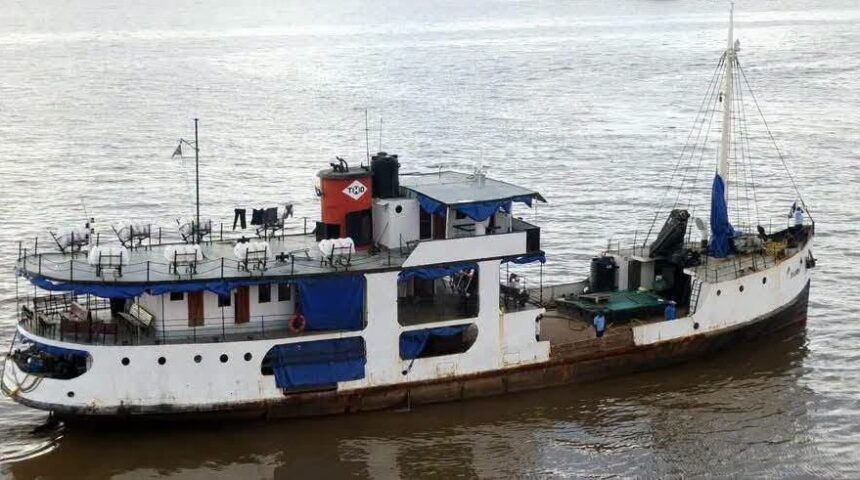
The MV Barima was no ordinary coastal vessel.
Originally built in 1939, the ferry had served Guyana’s waters for decades, undergoing modifications and repairs while continuing to carry passengers, vehicles, and cargo on challenging routes between Georgetown and the North West District.
On its final voyage, the vessel reportedly carried 268 tons of cargo, along with vehicles, 17 crew members, and 116 passengers, a complex loading scenario for an elderly hull operating in open coastal waters.
Yet, crucial technical details remain opaque to the public.
To determine whether the Barima was overloaded, Guyanese citizens, maritime professionals, and investigators must have access to the vessel’s certified specifications and operational limits, including:
- Gross Tonnage (GRT/GT)
- Deadweight Tonnage (DWT)
- Certified maximum passenger capacity
- Vehicle capacity (lane meters or maximum vehicle count)
- Cargo and passenger limitations imposed by inspections and the vessel’s age
Without these figures from the ship’s registry, classification records, or maritime authorities, any conclusion about overloading remains speculative.
Only by comparing actual loading, cargo weight, vehicles, passengers, crew, fuel, and stores, to these certified limits can a fair, evidence‑based judgment be made.
The Questions Guyana Must Ask , And Answer
In the wake of the Barima disaster, Guyana’s government and maritime regulators must confront uncomfortable but necessary questions.
These questions are not academic; they speak directly to whether the state fulfilled its duty of care to its citizens and whether similar tragedies can be prevented.
Core Technical Questions
GuyanaGraphic and the broader Guyanese public have a right to ask:
- What was the Gross Tonnage (GRT/GT) of the MV Barima, and what did that imply for its safe operational profile on coastal routes?
- What was the vessel’s Deadweight Tonnage (DWT), and how did 268 tons of cargo, plus vehicles and passengers, compared to this limit?
- What was the certified maximum passenger capacity, assuming a standard average passenger weight of about 185 lbs per person, and did the actual number of persons aboard exceed this limit?
- What was the vehicle capacity of the ferry in terms of lane meters or permissible combinations of cars, trucks, and heavy equipment?
- What cargo and passenger limitations were formally imposed on the vessel, considering its age, structural condition, and any modifications made over the years?
These questions must be answered with documents, not vague assurances.
Inspection records, stability booklets, load line certificates, and operating licenses must be made public and subjected to independent scrutiny.
Oversight and Accountability Questions
Beyond the vessel, Guyana must also ask:
- Were routine inspections carried out on schedule, and were any serious deficiencies left unresolved while the vessel continued to carry passengers?
- Did regulators ever reduce the Barima’s permitted load or passenger count based on age‑related fatigue, corrosion, or structural concerns?
- How are manifests controlled and verified, and who will be held accountable for any falsified or incomplete passenger lists?
- Were crew adequately trained in emergency procedures and crowd management on an aging, multi‑deck vessel?
- What contingency plans existed for rapid rescue on the Georgetown–Port Kaituma route, and were response times and resources sufficient?
Only by confronting these questions openly can Guyana honour the victims and survivors and begin to rebuild trust in its coastal transport system.
What a Real Mitigation Strategy Should Look Like
Official promises of investigations are a start, but they are not enough.
A credible, forward‑looking strategy must be detailed, time‑bound, and transparent, with reforms that citizens can monitor.
Key elements should include:
- Immediate, independent technical audits of all major coastal ferries, focusing on hull condition, stability, and certified loading limits.
- Public online access to basic vessel data, year built, GT, DWT, passenger and vehicle capacity, last dry‑dock date, and major inspection findings.
- Strict digital control of manifests and ticketing to prevent unrecorded passengers and deliberate under‑reporting.
- Route‑specific loading rules and seasonal restrictions for challenging coastal runs, backed by updated stability analysis.
- A phased retirement or major refit of elderly ferries, especially those built before a defined cutoff year, with priority for vessels operating in open sea conditions.
- Mandatory, regular emergency drills for crew and clear pre‑departure safety briefings for passengers.
- Establishment of an independent maritime accident board, empowered to investigate incidents, publish detailed findings, and recommend binding reforms.
Such a strategy would signal that Guyana has learned from the MV Barima disaster and is prepared to act decisively to prevent another catastrophe.
From Tragedy to Change
The sinking of the MV Barima is, above all, a human tragedy: lives lost and altered, families broken, communities grieving, and survivors carrying memories they will never escape.
But it is also a national test.
If the government and regulators respond with transparency, technical rigor, and genuine reform, this disaster can become a turning point in Guyana’s maritime safety culture.
If, instead, questions about gross tonnage, deadweight, passenger limits, and manifest integrity are left unanswered, then the waters off Guyana’s coast will remain as dangerous tomorrow as they were on the night the Barima went down.